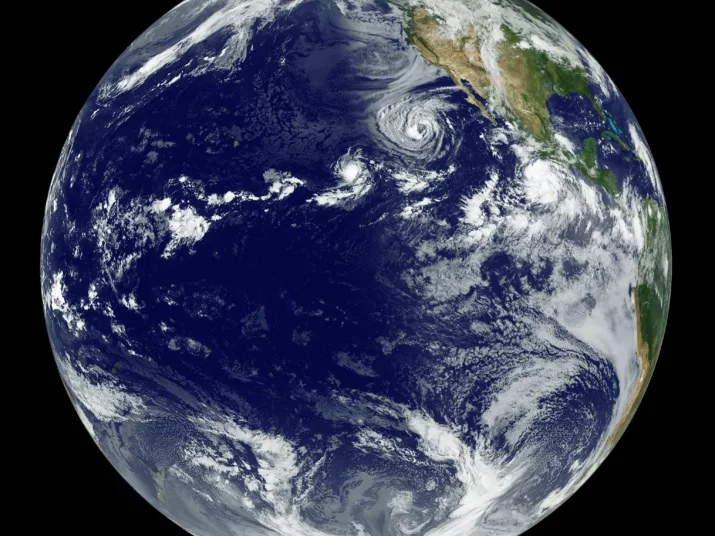
A view of the Pacific Ocean from space. The Pacific Ocean is the largest ocean in the world and covers nearly one-third of the Earth's surface, which is more than all the continents combined. Photo: shutterstock.
Marine treasure trove
The ocean covers around 70 per cent of the Earth’s surface, and their depths provide 99 per cent of the habitable space for plants and animals. Healthy oceans regulate the climate and provide vital resources. Without them it would be impossible to feed humanity. But also they indirectly benefit millions of people as recreational spaces. Therefore, protecting the ocean is crucial for survival on land and is considered the key to a more equitable and sustainable future.
A view of the Pacific Ocean from space. The Pacific Ocean is the largest ocean in the world and covers nearly one-third of the Earth's surface, which is more than all the continents combined. Photo: shutterstock.
Biodiversity
Biodiversity refers to the diversity of life at three levels: genetic diversity within species, species diversity, and ecosystem diversity. Biodiversity is the foundation of stable, functioning ecosystems worldwide that provide clean air and water and protect against natural disasters. In particular, the ocean's biodiversity holds enormous potential for medicine: 20 drugs currently in use can be traced back to genetic diversity in the ocean. In 2025, a genetic trait was discovered in the bowhead whale that causes its DNA to mutate less frequently. This trait could potentially help to prevent cancer in the future, provided that the effect can be replicated in human cells.
This demonstrates how important marine biodiversity is. Not only does it keep ecosystems stable and help us to address climate change more effectively, it also provides ideas and solutions for new technologies, medicines and other innovations from which we could greatly benefit in the future.
Yet we are currently heading towards the sixth mass extinction event caused by humans. Biodiversity is particularly at risk in the oceans. Climate change is one of the greatest threats, while intensive exploitation through fishing and tourism, deforestation of mangroves and the discharge of nutrients and pollutants are causing species and entire marine ecosystems to disappear. This has direct consequences for humans, as the decline in biodiversity weakens food sources, destabilises food chains and reduces important fish stocks. Furthermore, coastal ecosystems are losing their ability to store nutrients and purify water. In the long term, this will affect our quality of life and supply security.
Underwater revitalisation
Despite the alarming state of our oceans, there is reason for hope. Around the world, people are working to preserve and restore marine ecosystems, which play a central role in maintaining biodiversity. Habitats such as mangrove forests, seagrass beds, kelp forests and coral reefs are among the most species-rich on Earth. They provide breeding and feeding grounds for fish, invertebrates and other marine animals, protect coasts from erosion and store large amounts of carbon. Mangroves provide natural coastal protection and act as a nursery for fish, while seagrass sequesters carbon and supports fisheries. Coral reefs are biodiversity hotspots, and the high productivity and complex structure of kelp forests help ensure that marine habitats remain species-rich and stable.
Marine protected areas are key
In addition to restoring damaged habitats, marine protected areas are one of the most effective tools for protecting marine biodiversity. They enable ecosystems to regenerate naturally, provide refuges for endangered species and aid the recovery of fish populations. When implemented correctly, conservation measures at sea often prove to be even more successful than those on land: positive effects extend beyond boundaries of the protected areas, strengthening surrounding ecosystems and fisheries. This effect is known as 'spillover' (Here, a link to the interview with Leo Castro from the exhibition could be included, along with the following video:
However, human activity and nature conservation are not incompatible. Protecting marine biodiversity is closely linked to social justice and ensuring long-term food security. Scientists are therefore calling for at least 30 per cent of the ocean to be placed under effective protection by 2030, including heavily used coastal regions. At the same time, the sustainable use of the remaining 70 per cent, planned in collaboration with local stakeholders, remains possible. Preserving biological diversity is therefore not a restriction, but rather the foundation for healthy oceans and a liveable future.