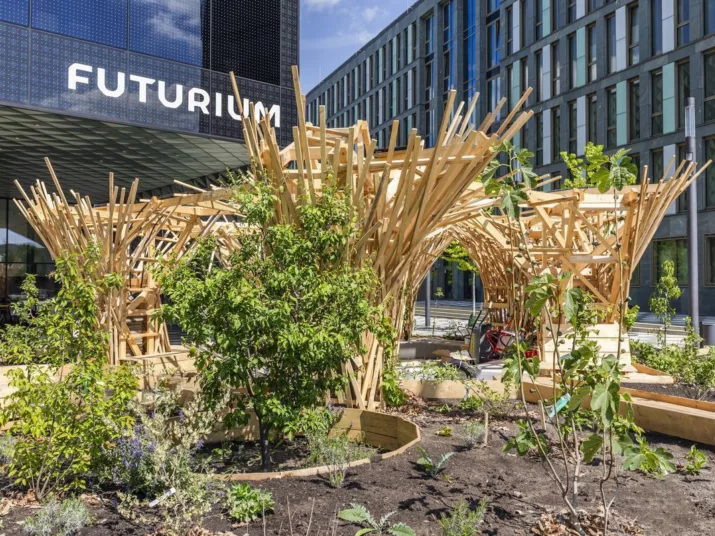
Welcome to Superland!
Modern agriculture is feeding more people than ever before. At the same time, it is damaging the environment: species are becoming fewer, soils and waters are polluted or out of balance, greenhouse gases are exacerbating climate change and extreme weather events. Agriculture itself is struggling with these consequences - harvests and food security are at risk. So not everything is super. But the good news is that many super solutions are already sprouting up - like the greenery here in “Superland”.
Photo: David von Becker
Discover the topics related to agriculture
Ever heard of planetary boundaries?
This is not about outer space - but about what our planet can cope with. How we use land and farm has a huge impact on several of the planet's boundaries.
⬅️ Click on the image opposite to find out more!

Climate change affects agriculture - and vice versa
Climate change is causing problems for agriculture. At the same time, agriculture itself is a driver of global warming. How can it adapt and at the same time become part of the solution?
Click on the image opposite to find out more! ➡️
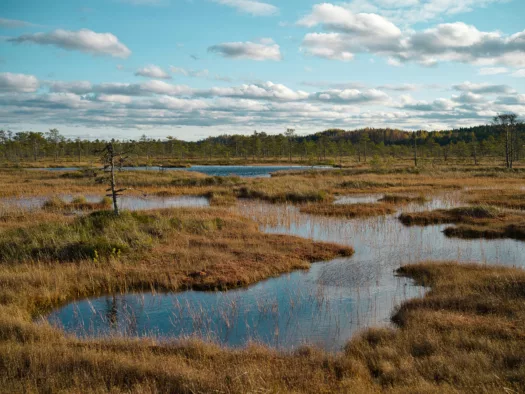
Photo: Maksim Shutov auf Unsplash
The foundation of life
Soils secure our food supply, store CO2 and are full of life. They are under pressure worldwide today. How can we protect them in the future?
⬅️ Click on the image opposite to find out more!
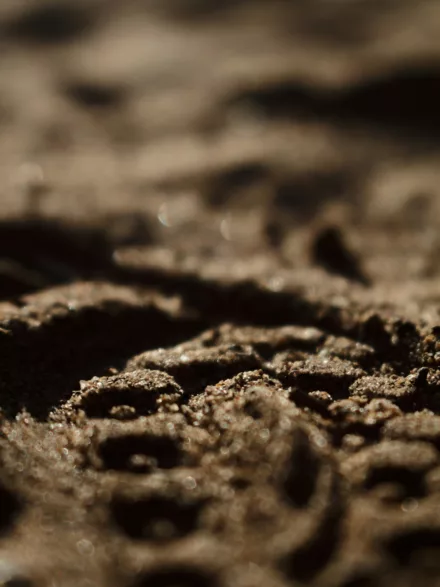
Layer by layer
From the ground to the treetops: forest gardens use space in layers. Superland shows how near-natural cultivation combines diversity, food and soil protection in a small space.
Click on the image opposite to find out more! ➡️
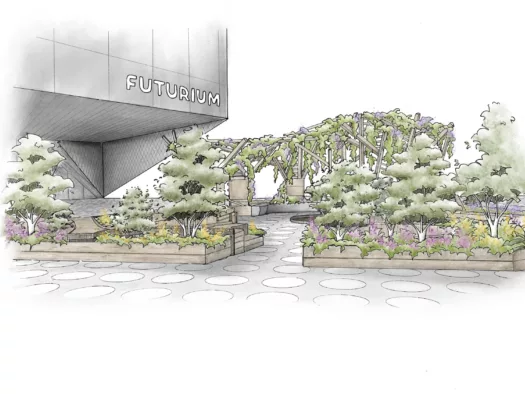
For a world without hunger
More people, fewer resources: agriculture is facing major challenges. It not only has to feed people, but also protect the climate and nature.
⬅️ Click on the image opposite to find out more!
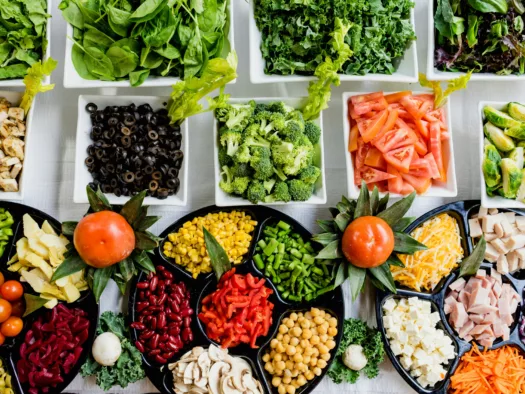
Photo: Dan Gold on Unsplash
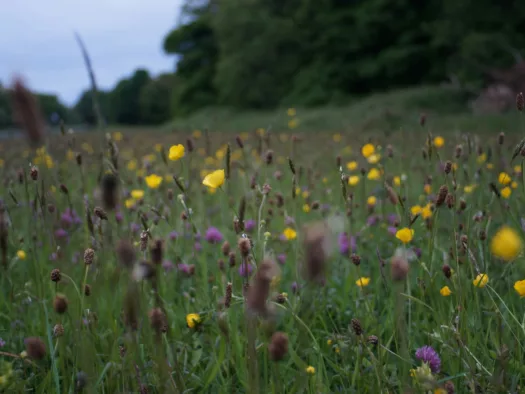
Farming or Flora?
Without insects, clean water and fertile soil, there would be no food. But today, agriculture is damaging biodiversity and ecosystems. How can food and nature conservation go hand in hand in the future?
Click on the picture opposite and find out more! ➡️
The makers
Credits Superland
Parzelle X
Parzelle X – Office for Landscape Architecture and Nature Education – was founded in 2015 by Katharina Böhme and Lulu Dombois. The two Berliners met while studying at the Technical University of Berlin. Since then, in addition to a deep friendship, they have shared a passion for designing socially oriented open spaces and for low-barrier access to environmental education.
The work of Parzelle X operates at the interface between theory and practice. Their fields of activity include conceptual planning and design processes - where they also like to lend a hand themselves - as well as the development of community and school gardens and the implementation of environmental education workshops or school garden lessons. In their projects, they create spaces that focus on community action, natural cycles and a respectful approach to the environment. Gardening close to nature, learning together and living together in green urban spaces are the cornerstones of their work.
For ten years, Parzelle X has been committed to establishing and designing cultural, social and consumer-free public spaces. The office pursues a process-oriented and participatory approach in which open spaces are created together with their future users.
Benjamin Frick
Benjamin Frick is an artist and designer with a background in architecture. Having grown up in Grenoble and now living in Berlin, he combines spatial design with sound and performance in his work. His projects examine how everyday routines shape our perception - and how they can be broken up through targeted sensory shifts.
He distorts perspectives, changes acoustic spaces or shifts physical boundaries in order to trigger irritation and curiosity. His works can often only be fully experienced in the moment and defy purely documentary reproduction. The aim is to initiate a lasting change of perspective - towards greater mindfulness and appreciation of one's own surroundings.
Frick deliberately works on an interdisciplinary basis: from concept to design and planning to production, he accompanies the projects from a single source wherever possible - or at least closely meshed in all phases. The result is a continuous design process in which technical, spatial and sensory aspects intertwine. The thoughtful, forward-looking examination of planning challenges is already incorporated into the design phase in order to avoid friction losses later on and to enable a coherent overall result with a uniform design language.